Air vehicle
Understand setup, launch and recovery, portability, power requirements and the operating limitations relevant to the proposed use.
 SPECIAL TRAINING BRANCH
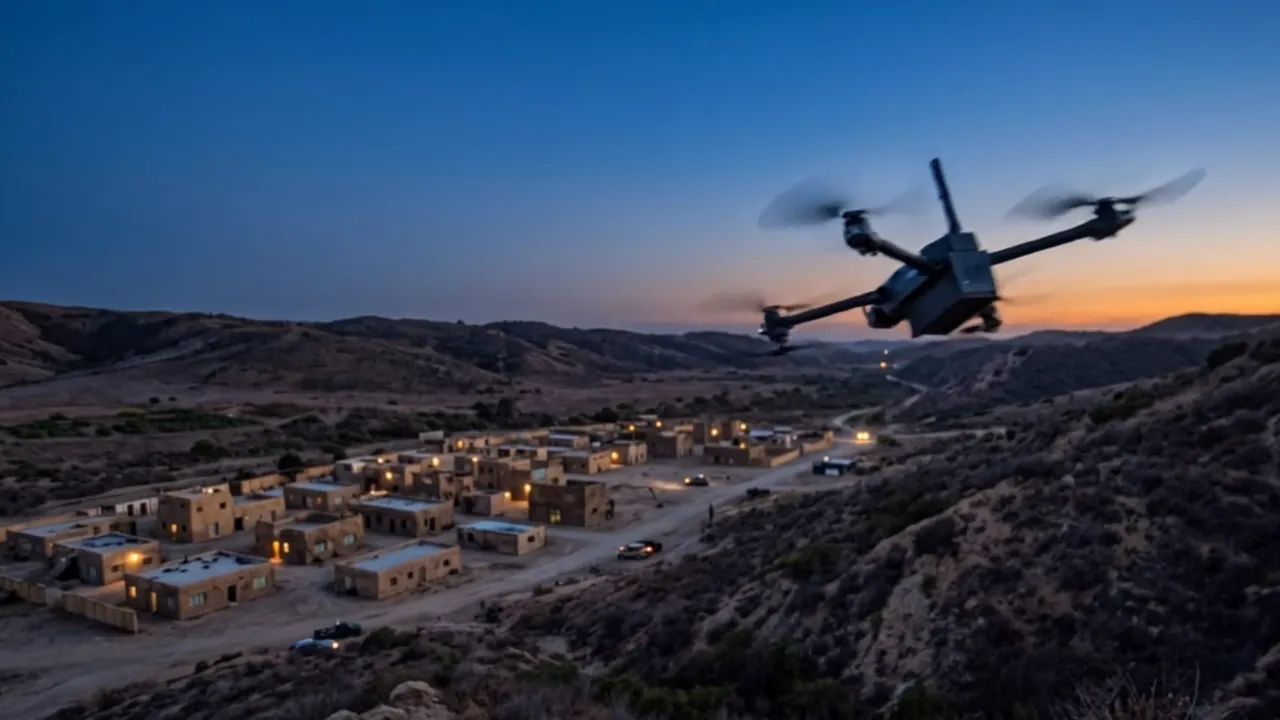
Small unmanned aircraft systems
Recon experience shapes the questions we ask of a small unmanned aircraft system: what can it observe, how does it support the unit and what does the Marine need to employ it?
sUAS AT STB
A small unmanned aircraft system combines the air vehicle, its payload, ground control and the links that connect them. Its value depends on the operator, the information it delivers and the unit it supports.
Our focus is ISR, collections and practical integration from a ground combat perspective for Marine Corps infantry and Recon units. We bring industry and Marines together around platform familiarization, observed performance, operator feedback and the training needed to build proficiency.
Our first pilot Advanced UAS Employment course builds on basic operator skills through experienced instruction, practical application and employment SOPs. Contact the branch for current opportunities and prerequisites.
Platforms and supporting capabilities
Understand setup, launch and recovery, portability, power requirements and the operating limitations relevant to the proposed use.
Look at the observation task, the usefulness of the imagery and the operator's ability to control the sensor and interpret what it provides.
Assess the controller, interface, workload and learning curve. See what the operator needs to plan, monitor and recover a flight.
Understand the control and data links, how information is shared and how connection limitations affect the system's usefulness.
Identify prerequisites, instructor support, practice requirements and how quickly Marines can become comfortable with the system.
Consider batteries, charging, replacement parts, maintenance, software support and the equipment needed to keep a platform available.
Compute & communications
Edge processing, onboard autonomy and ground-based analysis belong in the conversation when they help the Marine understand sensor information or reduce workload. Demonstrations should make power, connectivity, data handling and operator requirements clear.
Control links, radios, networks and information-sharing tools connect the platform to the people who need its output. Show how a capability fits with the aircraft and ground control, what it depends on and where its limitations are.
The maritime environment
STB's VBSS and maritime training experience informs our interest in aircraft that can support operations over water.
We welcome conversations with manufacturers developing maritime platforms, water survivability and recovery from the water where their systems support it. The opportunity is to show how those capabilities help the operator in a maritime setting.
The Edge showcase
The Edge centers on UAS platforms, with compute and communications supporting that focus.
This I MEF EOTG event, led and executed by STB, moves from static displays to coordinated demonstrations and supervised hands-on engagement. Manufacturers, developers and enabling-technology providers can bring their work into the same conversation.